- Joined
- Jun 23, 2020
- Messages
- 31
- Reaction score
- 29
- Country
-

Since the manga has gone back on hiatus after these last ten chapters, let's discuss one of the most significant character encounters: Hisoka and Tserriednich.
If someone is interested:
The recent meeting and confrontation between Hisoka and Tserriednich was an event that could, loosely, be predicted just by analyzing the core themes and designs of these characters.
Personally, I suspected Tserriednich already knew Hisoka beforehand. However, Togashi wants to build their dynamic from the ground up, showing Tserriednich learning Nen from scratch before finally crossing paths with Hisoka.
I have already posted some part of this analysis, but revisiting these points is essential to understanding the overall logic of the argument and its conclusion.
1) Symbolism of Characters


The conflict between Tserriednich and Hisoka can be interpreted as follows:
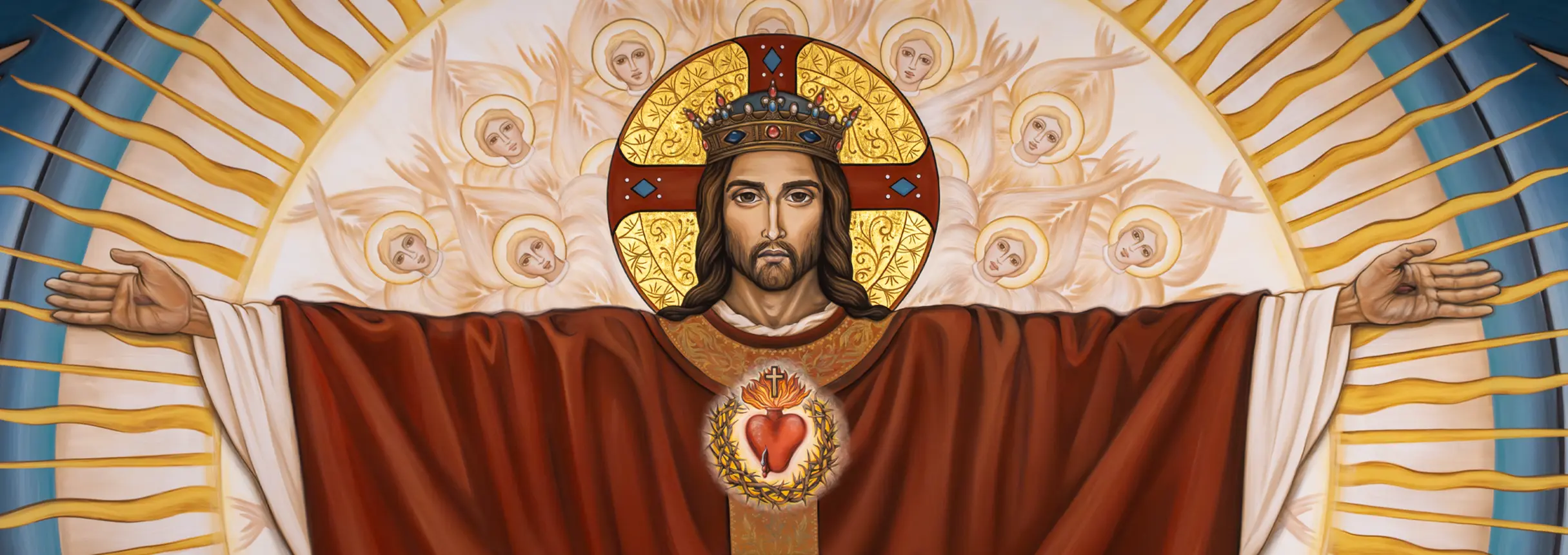
Togashi deliberately utilizes this symbolic duality and opposition in a single character, allowing these characters to embody opposing spiritual archetypes (Jesus-Antichrist/Devil) depending on the narrative context and the level of reading.
This fluid opposition also extends to the conflict between the Kakin Royal Family and Chrollo’s Phantom Troupe (who aim to steal Kakin's three sacred treasures). Here, the dynamic creates a socio-religious contrast:
2) Scheme of characters used by Togashi (based on Yang-Yin)
Parallel 1: The Genei Ryodan (Top Criminals) vs. The Zodiacs (Top Hunters)
Both 12-member organizations feature a central ideological and physical rivalry between two primary figures, balanced perfectly by a Yin-Yang dynamic of hair color and philosophy:
Notably, both Tserriednich and Razor share a thematic connection to the number 14 (7x2): the 14 Kakin Princes (linked to the Seven Deadly Sins) and Razor's 14 Devils. Furthermore, both Tserriednich and Hisoka are established serial killers who occupy the "Number 4" (related to "Death") in their respective groups.
This parallel plays out in two distinct ways:
Just as Beyond Netero mirrors Isaac Netero as a Yin-Yang reflection, King Nasubi and Prince Benjamin of the Hoikoro family structurally mirror Zeno and Silva of the Zoldyck family.
Isaac Netero (White hair/beard = Yang) pairs with Zeno Zoldyck (White hair and traditional Chinese mustache).
Beyond Netero (Black hair/beard = Yin) pairs with Nasubi Hui Guo Rou (Black hair and traditional Chinese mustache).
Both Zeno and Nasubi represent traditional, culturally coded patriarchs of immense families who interact directly with the Netero lineage.
1) Patriarchs:
This is a summary scheme I have already posted to understand the connection between these characters (including Hisoka and Tserriednich)

Conclusion: By deeply understanding the manga and its character dynamics, one could generally predict the encounter between Hisoka and Tserriednich. It also foreshadows Hisoka’s superiority (mirroring Ging's superiority to Razor) when comparing the central protagonist triad (Gon, Killua, and Kurapika) to the three main adversaries (Hisoka, Illumi, and Tserriednich).
Furthermore:
If someone is interested:
The recent meeting and confrontation between Hisoka and Tserriednich was an event that could, loosely, be predicted just by analyzing the core themes and designs of these characters.
Personally, I suspected Tserriednich already knew Hisoka beforehand. However, Togashi wants to build their dynamic from the ground up, showing Tserriednich learning Nen from scratch before finally crossing paths with Hisoka.
I have already posted some part of this analysis, but revisiting these points is essential to understanding the overall logic of the argument and its conclusion.
1) Symbolism of Characters
By the way, Togashi deliberately framed Tserriednich's Water Divination test to appear far more ominous and intense than even Neferpitou's. By doing so, he highlights that Tserriednich's Nen talent and inherent dangerousness are exceptional, standing out even among elite SpecialistsChrollo, Hisoka and Tserriednich have a symbolic meaning in the manga with their narrative roles constantly shifting between the archetypes of Antichrist, Judas and Jesus:
In religion:
In the manga:
- Jesus and 12 apostles with the resurrection of Jesus, death of 2 thieves
- Judas the Betrayer.
- Antichrist and the 7 deadly sins and the beast of the sea with the number 666
This creates a situation of Chrollo vs Hisoka vs Tserriednich (as 3 different versions of "evil" Jesus/Antichrist that mirror Jesus)
- Antichrist (Chrollo with the reversed cross) with 12 Apostles (12 members of Genei Ryodan), like Jesus.
- Judas (Hisoka the Betrayer), the resurrected one like Jesus and the death of the 2 thieves (Shalnark and Kortopi). Hisoka is born on 6 June/6 in relation to 666. Hisoka the Magician is based on Jesus the Magician (the title given to him by his detractors)
- Jesus (Tserriednich depicted like Jesus) and the 7 deadly sins (the 14 Princes 7x2=14) like the Antichrist. Gifted like Jesus (his fast learning of Nen). The 2 beasts of Tserriednich are the 2 beasts of the "Book of Revelation": the beast of the sea (with the number of the beast, 666) and the beast of earth; as a matter of fact, one of his beasts also has the number 666 (Laplace Devil)
Also, for example:
- Chrollo: Chrollo’s absolute readiness to die, his lack of fear regarding mortality, his ideas about the "soul/spirit" and his mandate that the Spider must survive him and them/the Troupe ("the Spider" must survive: the ideal not the flesh) are deeply reminiscent of the traditional theological depiction of Jesus. Just as Christ accepted his sacrifice, talked about the "soul/spirit" and commanded his apostles to continue preaching his ideals, being ready to die and go on.
- Hisoka: Hisoka's physical/literal resurrection and his representation of the 4th Month in the Ryodan (April) are linked to the festivity of Easter (Eostre, the Germanic April) and the resurrection of Jesus: Resurrection Sunday, or Pascha. The resurrection of "the flesh"
Chrollo vs Hisoka is a sort of Antichrist vs Jesus Christ or Jesus Christ vs Antichrist (it can be read in both ways) with the death and resurrection of Hisoka/Jesus- Tserriednich:The Kakin Succession Contest for the Kakin Empire, designed to crown a single absolute ruler, plays on the theological concept of "Jesus, the King of Kings". Tserriednich’s driving ambition to claim the throne and become king (not only of Kakin but of the world), his monstrous, near-divine Nen talent, directly mirror the depiction of "Jesus King of Kings". This depiction is also related to t birth of the Church during the Roman Empire that became an institution of power and richness, and it's development during th Middle Ages with also the Inquisition against "sinners": like Tserriednich, a wealty Jesus that is interest in richness and social power, wants the judgment of "sinners"/his brothers etc. Showcasing how the Church as an institution throughout history reversed the original ideals of "Jesus" (both the "theological Jesus" and "historical Jesus" that wasn't a "white western man" as typically depicted in modern times)
The conflict between Tserriednich and Hisoka can be interpreted as follows:
- Reading A: Tserriednich represents Jesus (his Jesus iconography) versus Hisoka as the Antichrist (his June 6th birthday, a nod to 666).
- Reading B: Tserriednich embodies the Antichrist (accompanied by his 2 Nen beasts: the 2 beasts of Revelation with 666) versus Hisoka as Jesus the Magician.
Togashi deliberately utilizes this symbolic duality and opposition in a single character, allowing these characters to embody opposing spiritual archetypes (Jesus-Antichrist/Devil) depending on the narrative context and the level of reading.
This fluid opposition also extends to the conflict between the Kakin Royal Family and Chrollo’s Phantom Troupe (who aim to steal Kakin's three sacred treasures). Here, the dynamic creates a socio-religious contrast:
- A wealthy "Jesus" (Tserriednich) versus an impoverished "Antichrist" (Chrollo) that can also be read in a reversed way with the poor "Jesus" (Chrollo) and and the wealthy "Antichrist" (Tserriednich).
- This class dynamic (the destitute Phantom Troupe vs. the elite Kakin royalty) mirrors another subversion and symbolic opposition: Hisoka and Tserriednich stand in opposition to Chrollo and Morena (Mary Magdalene): Dogman found Chrollo and Morena want to seek him out
2) Scheme of characters used by Togashi (based on Yang-Yin)
Parallel 1: The Genei Ryodan (Top Criminals) vs. The Zodiacs (Top Hunters)
Both 12-member organizations feature a central ideological and physical rivalry between two primary figures, balanced perfectly by a Yin-Yang dynamic of hair color and philosophy:
- Chrollo (Black Hair / Yin) vs. Hisoka (White Hair / Yang)
- Ging (Black Hair / Yin) vs. Pariston (White Hair / Yang)
- Hisoka (White Hair / Yang) pairs with the mercenary Illumi (Black Hair / Yin).
- Ging (Black Hair / Yin) pairs with the mercenary Muherr (White Hair / Yang).
- Hisoka (White Hair/Yang - Ryodan member) + Illumi (Black Hair/Yin - mercenary) + Tserriednich (White Hair/Yang - associated with Jesus and the 14 Princes).
- Ging (Black Hair/Yin - Zodiac member) + Muherr (White Hair/Yang - mercenary) + Razor (Black Hair/Yin - associated with "The Devil" and his 14 Devils: Razor ability of 7 devils that combine, reaching the number 13+Razor=14).
Notably, both Tserriednich and Razor share a thematic connection to the number 14 (7x2): the 14 Kakin Princes (linked to the Seven Deadly Sins) and Razor's 14 Devils. Furthermore, both Tserriednich and Hisoka are established serial killers who occupy the "Number 4" (related to "Death") in their respective groups.
This parallel plays out in two distinct ways:
- The Positive Outcome: Ging defeated Razor, eventually turning him into a trusted ally and co-creator of Greed Island.
- The Negative Outcome: Hisoka has confronted/"defeated" Tserriednich, and Tserriednich now sees Hisoka as a benchmark/rival and in the future probably an "alliance"? (reminiscent of Hisoka and Illumi but also different).
Just as Beyond Netero mirrors Isaac Netero as a Yin-Yang reflection, King Nasubi and Prince Benjamin of the Hoikoro family structurally mirror Zeno and Silva of the Zoldyck family.
Isaac Netero (White hair/beard = Yang) pairs with Zeno Zoldyck (White hair and traditional Chinese mustache).
Beyond Netero (Black hair/beard = Yin) pairs with Nasubi Hui Guo Rou (Black hair and traditional Chinese mustache).
Both Zeno and Nasubi represent traditional, culturally coded patriarchs of immense families who interact directly with the Netero lineage.
1) Patriarchs:
- Isaac Netero=Beyond Netero
- Zeno Zoldyck=Nasubi Hoikoro (patriarchs of Chinese traditions of an important family that interact with Isaac and Beyond Netero).
- Silva Zoldyck=Benjamin Hoikoro (tall and muscular sons that always follow their father, Zeno/Nasubi)
- Illumi=Tserriednich: evil elder brothers, adversaries to main characters that interact with Hisoka
- Gon and Killua/Alluka + Kurapika/Woble (main characters)
- Hisoka and Illumi + Tserriednich (main adversaries)
- Illumi related to the Illuminati of conspiracy theories and the Big Brother of 1984 in relation to the control of the world from the shadow (the 10 dons that controlled the world mafia divided on the 6 continents, killed, and controlled by Illumi): "Shadow/Illegal World"
- Tserriednich related to the succession contest with Jesus, king of kings: Tserriednich wants to become king and dominate the world, as he said, "Social/Legal" world related to the V5/V6
This is a summary scheme I have already posted to understand the connection between these characters (including Hisoka and Tserriednich)
Conclusion: By deeply understanding the manga and its character dynamics, one could generally predict the encounter between Hisoka and Tserriednich. It also foreshadows Hisoka’s superiority (mirroring Ging's superiority to Razor) when comparing the central protagonist triad (Gon, Killua, and Kurapika) to the three main adversaries (Hisoka, Illumi, and Tserriednich).
Furthermore:
- Antagonists as Protagonists: Despite their roles as antagonists, Hisoka, Illumi, and Tserriednich are often framed with the depth of protagonists. This is why Togashi depicts Tserriednich undergoing phases of growth, such as learning Nen (similar to Gon and Killua's journey), that are typically reserved for main characters, contrasting with conventional manga antagonists. The same applies to Hisoka, who frequently drives the narrative like a protagonist (also, Hisoka and Illumi took and passed the Hunter Exam with the main characters Gon, Kurapika, Leorio).
- The Protagonist-Adversary Parallel: Kurapika’s desire to send Gon and Killua to protect Woble aligns with this deeper narrative connection. It links the Zoldyck and Hoikoro families through the main characters, establishing a clear parallel: Gon / Killua Zoldyck / Woble Hoikoro and Hisoka / Illumi Zoldyck / Tserriednich Hoikoro.