Chapter 42
Musashi’s crystal colour is Red just like in the promo image and his sword spirit is diamond shaped, I imagine the shape of the sword spirit is based on the sword rather than the crystal colour since Kojiro had a common colour yet his sword spirit is probably one of the more elaborate ones so far. Though when Musashi previously tried to use this same sword earlier, it didn’t have this same diamond shape.
I like how the power the Bushi gained from Oni/Kishin isn’t restricted to the battle system, it’s also used to improve other aspects of life. Applying the same ability some Bushi have to fly into things like castles, it really helps make the world feel more interconnected and lived in. I noticed that the Takeda had a land based castle while most of their Bushi could fly and with the Bushidan in this arc the opposite seems to be true. I wonder if there is some sort of trade off there.
Nice, we have a map of Japan and it’s a full page spread as well. An integral part of world building imo, it’s nice to know where everything is in relation to each other and see the routes the main characters are taking, though since this setting has moving castles with towns in them I wonder how many landmarks there will be here. The geography of the map is quite different compared to the real Japan, all the provinces are still there except for the ones located on Hokkaido, which isn’t shown on this map. The main characters started out in Aki, travelled through Bingo and Bitchu to the Daitou Mines, which according to Kojiro is located somewhere between Bitchu and Mimasaka.
Neat detail on page 228 where you can see Tsugumi with that drunk Bushi in the background while Musashi and Kojiro are talking.
Best arc so far imo. Daitou Mines arc (19-42) > Tatsuyama Town arc (1-7) > Kosameda Bushidan arc (8-18).
Went into more detail about Musashi’s backstory giving us a view into what shaped his current personality and ideals. Also gave us some intrigue about the nature of the Obsidian Goddess and Jisai’s past as a Bushi. Expanded on the world building, a map laying out the geography of the setting, a look at certain Bushi rituals, like the trial of the sword and the memorial service for the fallen as well as how they conduct commerce with auctioning and using Oni sand as currency.
Introduced an extremely powerful antagonist in Shirou and despite the looming threat of the Kishin/Oni, battles against other Bushi don’t seem to be uncommon, since the Bushidan here had no hesitation attacking Shirou and even showed familiarity with Shirou’s action of killing people and taking their swords calling it a Sword Hunt. The main trio have a name for their Bushidan and chosen Kojiro as their leader, two new swords for Musashi and Kojiro and solidifying Kojiro’s additional goal of wanting to gain a deeper understanding of his father and the nature of Bushi.
Chapter 43
Love me some villainous organizations in my shounen, this group seems to be quite the motley crew which I like, the main core of Al-Thamen was kind of a hive mind. One of them looks like he practices three sword style, one has what seems to be a Flail or Chigiriki as it’s called in Japan, another with a bow and the giant seems to have a Temari/Gotenmari which symbolizes deep friendship and loyalty.
Eight members, Ohtaka seems to like this number since Sinbad and the Takeda both have eight generals as well. Though in this case it might be a reference to a Japanese novel called Nansō Satomi Hakkenden (The Legend of the Eight Samurai Hounds), which is also set during the Sengoku Jidai.
The novel doesn’t have a complete English translation, but going off the adaptations of the novel that do have English translations. Each of the samurai has a family name starting with “inu” and consider each other siblings similar to these guys.
The Hakkenshi also all have a birthmark in the shape of a peony which is the emblem of their clan, the black crystals, these guys have on their chests could be seen as a stand in for that. Lastly, each member embodies an aspect of Confucianism, those being filial piety, duty, loyalty, faith, brotherhood, sympathy, wisdom and courtesy.
Even though Nanao doesn’t have a Iron Oni weapon on her person right now she still has those crystals appearing on her, there’s also that panel with a black flame inside her chest. It’s seems these guys all having black crystals was done through artificial means, like implanting something into their bodies.
The way Nanao was talking about it made it sound like she recently underwent that process that would explain why Nanao has black crystals now which she didn’t have before. The way their black crystals are protruding from their hearts, when Shirou first revealed his black crystals I thought it looked reminiscent to art works such as the “Sacred Heart of Jesus” or “Immaculate Heart of Mary” both which are usually depicted as a heart being pierced by a sword or ensnared by thorns. I guess Nanao was crossdressing in the previous arc since she is wearing that sarashi? One of the dog samurai wears a disguise in Nansō Satomi Hakkenden though in that case, it’s a guy pretending to be female.
Really nice artwork of the environment on page 257, I like these moments of the characters struggling to move the motorcycle in the harsh terrain, really helps ground and humanize them. It will also be another way to mark their progress when they obtain better means of transportation. There appears to be someone else trapped alongside Kojiro and Tsugumi, a new party member?
Chapter 44
Michiru’s sword guard (Tsuba) seems to be shaped like a butterfly, their Bushidan emblem also seems to be a butterfly along with a cross. Fitting, seeing how she was introduced by being trapped in something very reminiscent to a cocoon. The butterfly on the emblem seems to be a swallowtail butterfly, the Taira clan had a different emblem using that same butterfly, that clan was made up of offshoots of the imperial dynasty.
The endgame of this whole conflict is Unity under Heaven and who gets to be the new ruler of Japan. I don’t see Musashi, Kojiro or Tsugumi ruling Japan, so maybe she could take that role. The Kanemaki Bushidan could be a military unit serving under her and achieve Unity under Heaven on her behalf. Samurai usually serve a lord and the main trio don’t have anyone like that, though maybe Tsugumi is loyal to the Tokugawa.
Chapter 45
This tank appears to be a fusion of modern tech and traditional Japanese culture, the part of the tank where the four are sitting on looks like a Mikoshi, a divine palanquin that’s meant to transport a Kami between a main shrine and a temporary shrine during some festival. I guess here its purpose is to convey her royal heritage.
Really curious to learn more about the inventor behind all this modern tech, as well as the person who first thought of using the Kishin/Oni power against them creating the Iron Oni Weapons. Maybe it’s the doing of a singularity, Sinbad and David had some ability to see into the future, so this person could be peering into the future and making new tech based on what they see.
If you look at the map we got in chapter 42 that same black mass is shown there, obscuring some of the provinces just more subtly, foreshadowing this obstacle.
Chapter 46
Ohtaka increased the amount of highlights on Michiru’s hair and made her eyes shiny, seemed to turn into a Shoujo character there for a sec.
Got a glimpse of what appears to be Oda Nobunaga (the panel next to the woman and baby), Takeda Naotora’s predecessor Takeda Shingen and Date Masamune seemingly fighting some Buddhist monks (possibly the Ikko Ikki). Their depiction seems fairly accurate, the Oda clan and the original Takeda clan emblems are also there. Though Masamune historically didn’t wear an eye patch, this is something popularized in fictional portrayals of him, also it seems to be on the wrong eye as well.
Nobunaga’s infantry is shown to be wearing Nanban Gusoku (Japanese armour based on European armour) so it should be quite some time since westerner first set shore in Japan and started trading. The first Kishin seems to have appeared near Kyoto, the mountain depicted could be Mount Hiei, where Enryaku ji is located, a Buddhist temple that Nobunaga set ablaze and killed off any people fleeing the temple including women and children. Mount Hiei is considered a sacred mountain and appears in many folklore involving Oni, Yokai, Deities etc. Some of Nobunaga’s retainers being Buddhists, they feared the spiritual repercussions of attacking the sacred site.
So the appearance of the first Kishin could be divine retribution for Oda Nobunaga’s deeds at Enryaku ji, the masses of people be them samurai or civilians getting incinerated indiscriminately by the Kishin does seem eerily similar to how the Siege of Enryaku ji is described. He was also seemingly the first Daimyo killed and even many years later, it’s still being taught in schools how horrible he was as seen in chapter 1.
The Ikko Ikki (the target of Oda’s attack on Enryaku ji) also strongly opposed samurai rule which seems to fit with the state of mining towns, where samurai/bushi are pretty much a marginalized class.
>The relationship between Nobunaga and Shingen, former allies, turned sour when Nobunaga attacked and burned to the ground the Enryaku-ji, the "mind" of the Ikko Ikki rebellions together with the Hongan-ji, on 1571.
>After this fact, Shingen, a fervent Buddhist, gave protection to the survivors of the massacre... Shingen made a boast about his role of protector of this fundamental figure for his religion by signing this further declaration of hostility as "Head of Tendai Sramana Shingen" .
>To "nickname" oneself after the name of a deity was not so absurd, think of Kenshin that considered himself the incarnation of Bishamonten himself-- Anyway, Nobunaga read this and probably thought that Shingen was out of his mind, so he replied ironically, signing his letter with a sarcastic "Demon King of the Sixth Heaven Nobunaga" (Dairokuten Maou Nobunaga), as a way to mock Shingen's pompous nickname, impersonating his exact opposite.
These events are why Oda Nobunaga is often portrayed as a cruel sadistic villain in most works of fiction, there’s even a tv tropes page about this.
https://tvtropes.org/pmwiki/pmwiki.php/Main/DemonKingNobunaga?from=Main.DemonLordNobunaga
The way Nobunaga is demonised in the schools of mining towns in Orient might have been done to parallel this, given the manga’s focus on the theme of legacy there might be some meta commentary on this subject down the line.
Siege of Mount Hiei took place 29th of September 1571
Takeda Shingen’s death happened 13th of May 1573
So if the Kishin did appear because of the former event than it would have to be somewhere between these dates because Shingen is shown fighting some Buddhist monks seemingly after it touched down.
The fourth silhouette is holding a sword that appeared in chapter 7 alongside those 3 Bushi and it’s placing their hand over their face like the middle Bushi from chapter 7 so it’s probably the same character. The silhouette in the middle in chapter 46 with the dreadlocks, seems to be the other Bushi from chapter 7 across from Shirou. Those two must be pretty damn strong if they’re appearing in these top tier Bushi showcases twice.
I was wondering why Ohtaka changed the map of Japan, whether she just wanted something easier to write for or if there was some sort of in universe reason for it? Glad the latter is the case, what better way to show how the Kishin/Oni changed and corrupted Japan than by having them literally change the geography of the country?
That visual of the Kishin smashing into that city felt very Kaiju like, this Kishin doesn’t seem to resemble any Yokai, the closest one to it seems to be the Daidarabotchi. Described as pitch black and as “so large that their movements shape the world.”
http://yokai.com/daidarabotchi/
That town destroyed by the Kishin is similar in appearance to Tatsuyama Town, giving us a frame of reference for how much damage was caused and highlights the possible danger Tatsuyama could be in eventually. Curious to see how they’re going to defeat a Kishin powerful enough to single handedly change the face of the landscape. The town it destroyed was pretty close by wonder if the main trio will get to interact with any of the citizens since the town seemed to be evacuated. I guess that’s another reason to having those moving fortresses.
Chapter 47
In the first full page spread with the series title, in the bottom right, you can see a truck and to the left some cars. Hope we do get to see some Bushi ramming their cars into droves of Oni. Warfare in this setting must be bat shit insane.
Great fight choreography during that brief exchange with the armoured leg guy, him dodging and counter attacking in a single motion was pretty smooth. He had a pretty unique headlock, trapping Musashi’s neck with the front of his foot, reminiscent of the Gogoplata. I also liked how Musashi attacked using the pommel of his sword, similar to half swording or the mordhau. Drawing that huge sword from its sheath would take some time, so trying to attack with the hilt while simultaneously drawing it is pretty practical.
Some clan emblems on page 376 they appear to be the Toki/Akechi,
Otomo, Omura clans. Also the dude with the armoured leg seemed to have the Shimazu clan emblem on his back. Glad we’re finally getting to see some Sengoku Jidai clans in the present day.
If they have access to aircrafts such as helicopters (that probably don’t require fuel) then travelling to other countries like China or Korean should be pretty easy, I wonder if the series will visit those areas, the name Orient implies more then just Japan.
Naotora is back, wonder if his relationship with the Uesugi leader is similar to the relationship between Takeda Shingen and Uesugi Kenshin, they were rivals but they also respected each other. Seeing the guy who effortlessly rekt Musashi bow to Naotora, really does a good job showing the hierarchy at play here.
Chapter 48
Glad to see Naotora is still a troll, though his joke seemed to hit a sore spot with Musashi considering his past.
The five clans on page 255 seem to be Tokugawa, Takeda, Uesugi, Hojo or Tanegashima and Narita or Yui. It appears the leaders of those five clans are the same five mentioned in chapter 46 page 378, the order they’re arranged in even seems to be the same with Takeda Naotora being second and Uesugi being the third.
The way those samurai skeletons are holding their swords and their general arrangement is reminiscent to those Bushi who were being controlled by the Obsidian Goddess in chapter 38. Since people with black crystals can seemingly manipulate Iron Oni weapons, I wonder if it would be possible to control an army of the dead through their weapons.
Uesugi Tatsuomi, when he was alluded to in chapter 7 he looked like he had both his eyes, wonder how he lost one. He does kind of resemble a shaman with those dreadlocks and priest like clothing. Maybe Jisai being like a spirit medium to the Obsidian Goddess in the past, has something to do with him.
Chapter 49
Kind of ironic that the Uesugi Bushidan is so focused on blood tides since Uesugi Kenshin was adopted into the Uesugi clan and I don’t believe he had any biological children unless that played out differently in this iteration. Jisai and Kojiro were more of a family to him than his actual blood relatives, so understandably Musashi has a pretty legitimate reason not to buy into that mentality.
Love how the picture scroll is still being used to reveal information about the world, illustrating how strong this new Kishin is by showing it completely dwarf Engoku Tengu in size. There seem to be many lines connecting the Kishin together sort of like the crane attack the Takeda did on Engoku and the Obsidian Goddess did to Shirou, given the ongoing theme of unity, the OB words to Shirou, the Kodama Oni and Unity under Heaven etc. I wonder if the first Kishin might get weaker with each successive defeat of the lower Kishin surrounding it. That would make sense story wise for why the first Kishin isn’t fought straight away and is instead saved for last.
Looks like the next Kishin is based on Yamata no Orochi, a notable Yokai from Japanese mythology who was defeated by the storm God Susanoo.
http://yokai.com/yamatanoorochi/
“they explained that they once had eight daughters, but every year the eight-headed-eight-tailed serpent Yamata no Orochi demanded one as a sacrifice” So I guess those female bodies attached to the heads may be an homage to that part of the legend. Also the part where Susanoo finds Kusanagi no Tsurugi (one of the Sacred Treasures) inside Orochi is similar to what was stated in chapter 7 about the Sacred Treasures returning when the strongest Kishin is defeated, maybe that’s where Ohtaka got the inspiration from.
Chapter 50
God this manga has some stunning double page spreads, that appears to be a statue of Bishamonten, a Buddhist war deity that Uesugi Kenshin often prayed to, because of Kenshin’s prowess on the battlefield people thought he was the avatar of Bishamonten so he was often referred to as the God of War. Uesugi Tatsuomi despite his rough exterior seems to be a swell dude, he clearly cares about the people in his Bushidan whether they’re Bushi are not and begrudges the idea of sending someone so young into a war which is surprising since that’s more in line with how people think nowadays but during the Sengoku era people wouldn’t think twice about child soldiers.
Red Oni are offensive and Green Oni are Defensive so does that apply to Bushi as well? Since they seem to have the same 6 colours (including Black) that Oni do.
Chapter 51
Pretty amusing joke of the trio thinking they will be alright as long as they’re together only for them to get separated seconds later, that one joke about Tsugumi becoming a new woman for some slaves was pretty dark.
The females to the left in the double page spreads seem to have guns on their backs, can’t wait to see them in use, since Demon swords can basically shoot energy projectiles they can double as both melee and long range weapons so that kind of makes guns seem irrelevant but hopefully guns have something to make them worthwhile.
Musashi got some new clothes towards the end of the chapter that’s pretty similar to what he wore during the end of the previous arc I hope he gets a more samurai inspired design during this arc since he isn’t a miner anymore there’s really no reason to be still wearing that uniform.
Chapter 52
So much animosity between these guys, that is probably going to affect their performance in battle, even when the winner of this battle becomes the leader I doubt most of these guys are going to be ok with it. The rules for this battle seems kind of similar to sumo wrestling, where the goal is to push the other opponents out of the ring.
Supposedly, when samurai had a duel IRL they would state their name and the school of swordsmanship they followed. I’m guessing so any victories or losses could be reflected on the school and even if people didn’t know about the person they could have knowledge of the school they were apart of. Speaking which even though Musashi mentioned Kanemaki no one seems to know that name, Shirou and Nanao at the end of the previous arc made Jisai seem like some notorious person.
Nice deflection parry by Musashi at the end there, seems he’s starting to get a read on that kicking based fighting style. Would have been nice if the other two announced their schools of swordsmanship, but I guess their clan names was enough.
Chapter 53
Good fight choreography, loving the cool weapons and the wide variety of fighting styles in this series. Aikihiro looked like he was using a mix of Taekwondo and Breakdancing. Some of the Taekwondo techniques I noticed was the Jump Spin Hook Kick during their first fight in chapter 47, an Axe Kick last chapter and in this chapter some Roundhouse Kicks, a Butterfly Kick and a Side Kick. And that break dancing move he pulled in the double page spread seems reminiscent to a Martelo de Negativa or Meia lua de compasso from the martial art Capoeira.
Katsumi seems to be using a Iaijutsu/Battojutsu fighting style, the concept behind that style involves drawing and attacking in quick succession. The attack Musashi used in chapter 1 was a souped up version of this concept.
Musashi and Katsumi blocking strikes via half swording, Musashi stepping on the blunt side of the katana to block it which is pretty similar to this excerpt from The Book of Five Rings written by the real Miyamoto Musashi. “Stomping a Sword”
“In the context of individual martial arts as well, if you strike in the wake of an opponent’s striking sword, it will turn into a clashing, clanging volley of blows, and you will get nowhere. When an opponent lashes out with his sword, you overpower his assault by stomping the sword down with your foot, seeing to it that he cannot strike a second blow.”
Pretty cool of Ohtaka to incorporate aspects of real martial arts, hell before this Hideo was using multiple sword stances which appear to be from Katori Shinto Ryu in situations where they’re meant to be used, for example Tachi no Kamae is meant for parrying attacks and Sha no Kamae is used to observe your opponent’s movements, stance and bait them into attacking, even the footwork is accurate.
So yeah, really digging the swordplay in this series, looking forward to Ohtaka adding things like Kojiro’s Tsubame Gaeshi technique, Musashi’s Niten Ichi Ryu and maybe some western swordsmanship since there were foreigners in Japan during the Sengoku Jidai. Magi had some fights that looked like it took inspiration from old HEMA manuals so Ohtaka seems to know about them.



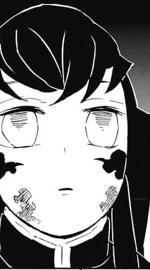



 As for michiru, another thing she shares with kougyoku being a butterfly themed/inspired girl (funny my new magi kimetsu no yaiba has a butterfly girl too as volume 6 cover what a coincidence). that clothes pattern look nice though I wish she was probably dressed on the cover, since ohtaka doesn't draw the details in the actual panels. a successful character start from the design (...most often)

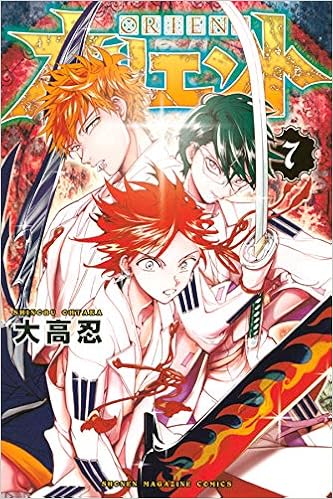




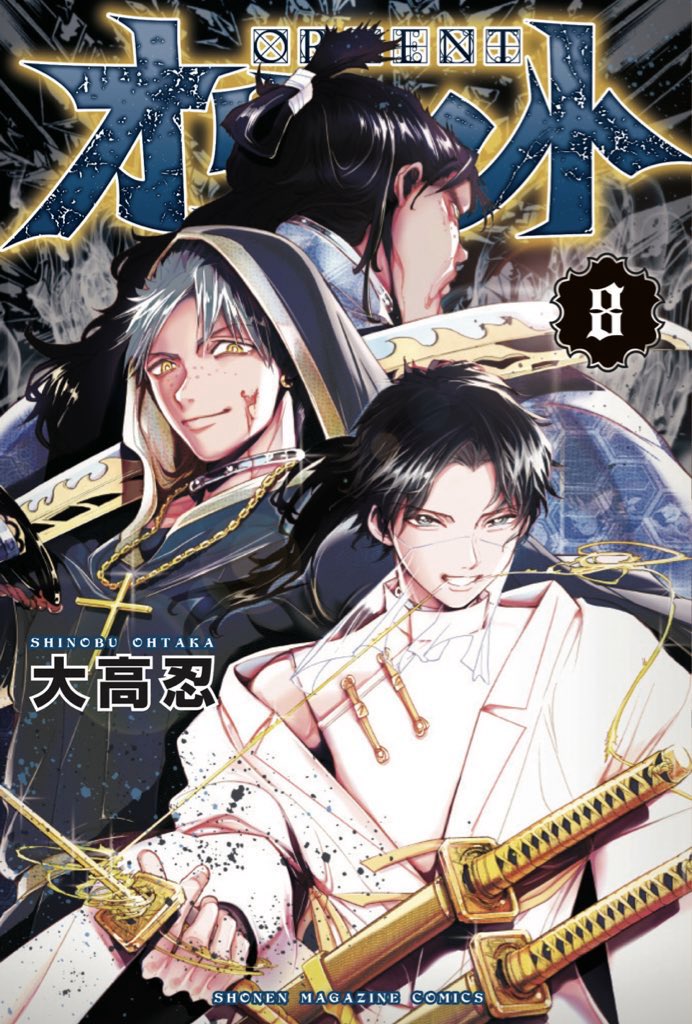
 I find this manga still quite enjoyable (might be my bias towards Ohtaka) and most of the raws contain some pretty crazy stuff that i am eager to read.