- Joined
- Jan 8, 2010
- Messages
- 485
- Reaction score
- 408
- Gender
- Male
- Country
-

This thread is for references of characters, skills, places etc in Nurarihyon no Mago. You can also ask and answer any questions about these references and discuss about them.
Youkai References :
- Gazu Hyakki Yakou series
- Ehon Hyaku Monogatari
- Toono Monogatari
- Inou Mononoke-roku
- Various folklores
You can also go to this thread for more on youkai
Character/Group Names References :
- Ryuuji and Kiyo Cross Squad are homage to Kyougokudou series written by Kyougoku Natsuhiko
- Names of characters (Kurata, Ienaga, Suganuma, Usami) are derived from Gamba Osaka team player's name
- Sanbagarasu names, Kuroumaru is from crow, Tosakamaru is from cockscomb (tosaka) because of his hair, while Sasami is from chicken/bird breast meat (sasami)
- Awashima is from a deity in Shinto
- Hyaku Monogatari (ch131)
百物語 Hyaku Monogatari is a game played at night, where 100 candles are lit and all present take turns to tell ghost stories, blowing out a candle after each story. When all are blown out, a youkai is supposed to appear.
- Ooroi no kai, one of the Edo Hyaku Monogatari clan youkai, the giant youkai's name is from a footbal player, Aaroy.
Item/Weapon Names References :
- Nenekirimaru (祢々切丸)
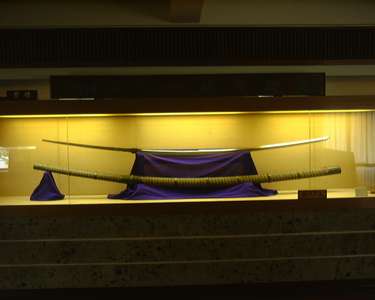
Nenekirimaru is from 1 of the 3 sacred katana enshrined in Futarasan shrine. Japanese longest oodachi with 3.4 m total length, 2.2 m blade length and 22.5 kg weight. Said to be the katana that slay a youkai named Nene. For Nene itself, there are variations from an insect youkai with "ne ne" voice, a kappa-type youkai, mispronounce of Nue, or demonized landslide
- Maou no Kozuchi (魔王の小槌)

Maou no Kozuchi is from a wooden mallet appears in Inou Mononoke-roku. It is said that Sanmoto Gorouzaemon gave it to Heidayuu in the 40th night after he withstand Sanmoto attempt to frighten him in the previous 39 night. Heidayuu then used it to cease the revolt in Matsuyama castle where the tanuki youkai, Inugamigyobu Danuki, also involved. The mallet is reserved in Miyoshi City Museum of History and Folklore
- Itaku sickles' names are from its' handle's grip. Cloth, bamboo, iron, wood, katana and fry pan
- Hakuzouzu spear's name is from Yakshini, a Hindu/Budha mythical being
- Kitsune 4 Tail's Spear's name, Tora Taiji (虎退治), is from the crescent spear used by Katou Kiyomasa to kill a tiger in his expedition in Korea
- Sesshouseki (ch 134)

殺生石 Sesshouseki, literally translates to "killing stone". There seem to be many versions of the story, but here's the one that popped up the most in a Google search.
Once upon a time, a mythical fox spirit Hakumen Konmou Kyuubi no Kitsune [白面金毛九尾の狐/White Faced Golden Haired Nine Tailed Fox] was wrecking havoc and committing all sorts of evil acts in China and India, all the while disguised as a beautiful woman. Around 800 years ago (from the present time), she came to Japan, during the reign of Emperor Toba. She took on the name Tamamo no Mae [玉藻の前/Before the Seaweed], and attempted to bring the country to ruin by working in the imperial courts.
However, an Onmyouji of the time, Abe no Yasunari [阿部康成 - interestingly, said to be the younger brother of, a descendant of, or possibly even Abe no Seimei himself. And we all know the role Abe no Seimei plays in NuraMago...], saw through her disguise and she fled to Nasunogahara. The imperial court saw her as a danger to the denizens and to travelers, and so sent Miuranosuke [三浦介] and Kazasunosuke [上総介] after her and finally had her exterminated. However, she became a poisonous stone and gave off poisonous gas that was dangerous to humans and to animals, hence the name "killing stone". Also, people were not allowed to go near to it. However, the founder of Jigenji [示現寺/Celestial Manifestation Temple] in Aizu prefecture, High Priest Gennou [源翁] sealed off the malice of the fox that was contained in the stone, thus the amount of poisonous gas has been greatly reduced.
- Taisho Roman Glass (大正浪漫硝子)
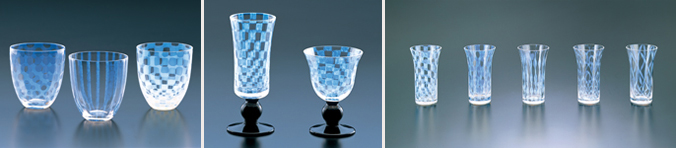
Glass made with handcrafting technique, by mixing bone ash and exposure it to temperature gap the glass surface will have opalescent color. Popular in Meiji and Taisho era.
- Kumade (熊手)

Kumade is bamboo rake that is decorated colorfully and believed to “rake in good fortune” and those who purchase and display them will get happiness. It is believed that to ensure good fortune stay, each year the kumade bought has to be slightly bigger from the previous year.
Poem/Play Names References :
- Yamabuki Poem/Song (ch 133)


山吹 Yamabuki is the Japanese name for the Japanese Kerria (Kerria japonica) also known as Japanese Yellow Rose. Pictured on the left is the "normal" version, pictured on the right is the "pleniflora" version which is double-flowered (look at the poem below about how the "flowers bloom seven-fold and eightfold".
七重八重花は咲けども山吹の実の一つだになきぞ悲しき
Nanae yae hana wa sakedomo, yamabuki no mi no hitotsu da ni naki zo, kanashiki
Flowers bloom sevenfold and eightfold, but the kerria laments, for not a single fruit does it bear
The song was written by Imperial Prince Kaneakira (914-987) and contained in the 後拾遺和歌集 [Goshuui Wakashuu], a collection of waka [Old Japanese poems]. The story is that Ohta Doukan, a military commander, sought shelter at a house along a mountain path, and this was the poem that was spoken to him by the girl in that house when she handed him a kerria branch instead because they had no straw raincoats at home to lend him. Confused? Well, that's because while "mi no hitotsu da ni naki" means "does not have [bear] a single fruit", but it can also mean "does not have a single straw raincoat" [蓑 mino = straw raincoat]
- Busu (附子), from a kyougen with the same title.
The original story is about a master who told his two servants not to get near a bucket because it's filled with poisonous busu (dried aconite root) before he leave the house. After a while, the servants opened the bucket and it's actually sugar inside (the play made in Muromachi period, and sugar is considered as valuables that time). They eat up the sugar and regret it after the bucket turn empty. They then break the master's favorite hanging scroll and teacup and wait for the master to come home. When the master come home, they cried. The master asked them why they are crying, they answered that they broke the master's hanging scroll and teacup so as apology they want to commit suicide by drinking the poison, but alas they are not dead. The master can only dumbfounded hearing it.
In the manga, the master role is Hidemoto 26th, servant 1 (Taroukaja) is Ryuuji, servant 2 (Jiroukaja) is Akifusa. With the punchline become the busu is actually shouyu (soy sauce), as Yura tasting the shouyu with TKG, the shouyu taste turns out to be really fit for TKG and ended with Yura and Hidemoto 26th found out that both of them are TKG lovers.
- Tōryanse (通りゃんせ)
Traditional Japanese children's tune. It is the most common choice for music, alongside with Kagome, played by traffic lights in Japan when it is safe to cross.
Skill Names References :
* Yura's shikigami names are based on Big Dipper :
- Tanrou (貪狼), Dhube, a wolf shikigami
- Kyomon (巨門), Merak, an elephant shikigami
- Rokuzon→Rokuson (禄存), Phecda, a deer shikigami
- Bunkyoku (文曲), Megrez
- Renchou→Rentei (廉貞), Alioth, a goldfish shikigami
- Bukyoku (武曲), Mizar, an ochimusha shikigami
- Hagun (破軍), Alkaid, ancestors shikigami
* Yura exorcist walking method Uho (禹歩), is from Chinese Tao, a walk method said to be created by Yu, the founder of Xia dynasty. Said to have charm against evil spirit and purification effect. Have a high all-purpose use sorcery. Used to walk in the mountain, take panacea in sacred mountain, evade soldiers, remove evil spirit, summon demon, healing disease, longevity pray etc.
There's a lot of variation, the basis is the one recorded in "Xun Zi" where you walk with sliding feet so the hind leg won't cross over foreleg.
* Nurarihyon-type skill name are from 4-words idioms
- Meikyoushisui 明鏡止水 (clear and serene (as a polished mirror and still water))
- Kyoukasuigetsu 鏡花水月 (something that is visible but having no substance)
* Matoi names are from kasane no irome of Junihitoe

- Yukinoshita Beniume 雪ノ下紅梅 (for winter)

- Shion 紫苑 (for fall)
* Ibaraki-douji skill, Ondeko 鬼太鼓 (demon drum) is from a tradition in Sado island
* The Pentagram Seimei uses is actually considered closely link to him. In Japanese culture, the pentagram (五芒星 gobōsei) is a symbol of magical power, associated with the onmyoji Abe no Seimei; it is a diagram of the "overcoming cycle" of the five Chinese elements (Wu Xing). As a predominantly non-Christian country, with a different set of associations attached to the symbol, there is no social stigma associated with it.
http://merlinravensong2.tripod.com/the-pentagram.html
Area References :
* Shikoku youkai landmarks :
- Yamaguchi Reijin-ja, located in Kutani town, Matsuyama, Ehime prefecture
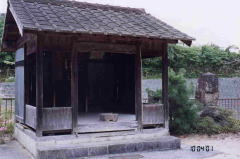
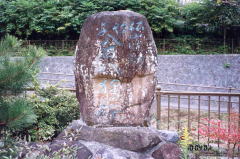
- Shikoku 88 sacred spot
* Hideshima Domain (the area where Sunako lives, and Jami is originally from) is actually the Shogawa river valley
* Toono, where Rikuo train his fear, is hometown for various youkai folklores
* The place where Nurarihyon first takes Youhime for a party with his Hyakki Yakou is Shimabara
* Takarabune crash lands in Kamogawa (the Kamo River)
* Kyoto seals :
- Fushime Inari Jinja (伏目稲荷神社)→Fushimi Inari Jinja (伏見稲荷神社)
- Hashira Imperial Villa (柱離宮)→Katsura Imperial Villa (桂離宮)
- Ryuuenji (龍炎寺)→Ryōanji (龍安寺)
- Seieiji (清永寺)→Kiyomizudera (清水寺)
- Nishi Hōganji (西方願寺)→Nishi Honganji (西本願寺)
- Rokukinji (鹿金寺)→Kinkakuji (金閣寺)
- Shōkokuji (相克寺)→Shōkokuji (相国寺)
- Nijō Castle (弐條城)→Nijō Castle (二条城)
# Nuegaike is located in northwest part of Nijō castle and has been reconstructed into a park

* The place where Kubinashi, the geisha (Shiragiku) and child Kino met when Kubinashi and Kino still human is Yoshiwara
* Miyoshino Jinja (三好野神社)→Miyoshino Jinja (三芳野神社), the shrine where Tōryanse is originated.

Historical figures :
- Abe no Seimei
- Ashiya Douman
- Fujiwara Yorimichi
- Yodo-dono
- Toyotomi Hideyori
- Toyotomi Hideyoshi
- Miyakohime/Kaminagahime
- Tenkai
- Mito Komon
- Tokugawa Tsunayoshi
- Yanagisawa Yoshiyasu
Cameo :
- As fellow ex-assistant of Araki Hirohiko, Tanaka Yasuhiro drew Hakutaku in Nurarihyon no Mago act 1 while Shiibashi Hiroshi drew Tsurara in Hitomi no Catblepas one-shot
You are welcome to give correction, addition etc.
Youkai References :
- Gazu Hyakki Yakou series
- Ehon Hyaku Monogatari
- Toono Monogatari
- Inou Mononoke-roku
- Various folklores
You can also go to this thread for more on youkai
Character/Group Names References :
- Ryuuji and Kiyo Cross Squad are homage to Kyougokudou series written by Kyougoku Natsuhiko
- Names of characters (Kurata, Ienaga, Suganuma, Usami) are derived from Gamba Osaka team player's name
- Sanbagarasu names, Kuroumaru is from crow, Tosakamaru is from cockscomb (tosaka) because of his hair, while Sasami is from chicken/bird breast meat (sasami)
- Awashima is from a deity in Shinto
- Hyaku Monogatari (ch131)
百物語 Hyaku Monogatari is a game played at night, where 100 candles are lit and all present take turns to tell ghost stories, blowing out a candle after each story. When all are blown out, a youkai is supposed to appear.
- Ooroi no kai, one of the Edo Hyaku Monogatari clan youkai, the giant youkai's name is from a footbal player, Aaroy.
Item/Weapon Names References :
- Nenekirimaru (祢々切丸)
Nenekirimaru is from 1 of the 3 sacred katana enshrined in Futarasan shrine. Japanese longest oodachi with 3.4 m total length, 2.2 m blade length and 22.5 kg weight. Said to be the katana that slay a youkai named Nene. For Nene itself, there are variations from an insect youkai with "ne ne" voice, a kappa-type youkai, mispronounce of Nue, or demonized landslide
- Maou no Kozuchi (魔王の小槌)
Maou no Kozuchi is from a wooden mallet appears in Inou Mononoke-roku. It is said that Sanmoto Gorouzaemon gave it to Heidayuu in the 40th night after he withstand Sanmoto attempt to frighten him in the previous 39 night. Heidayuu then used it to cease the revolt in Matsuyama castle where the tanuki youkai, Inugamigyobu Danuki, also involved. The mallet is reserved in Miyoshi City Museum of History and Folklore
- Itaku sickles' names are from its' handle's grip. Cloth, bamboo, iron, wood, katana and fry pan
- Hakuzouzu spear's name is from Yakshini, a Hindu/Budha mythical being
- Kitsune 4 Tail's Spear's name, Tora Taiji (虎退治), is from the crescent spear used by Katou Kiyomasa to kill a tiger in his expedition in Korea
- Sesshouseki (ch 134)
殺生石 Sesshouseki, literally translates to "killing stone". There seem to be many versions of the story, but here's the one that popped up the most in a Google search.
Once upon a time, a mythical fox spirit Hakumen Konmou Kyuubi no Kitsune [白面金毛九尾の狐/White Faced Golden Haired Nine Tailed Fox] was wrecking havoc and committing all sorts of evil acts in China and India, all the while disguised as a beautiful woman. Around 800 years ago (from the present time), she came to Japan, during the reign of Emperor Toba. She took on the name Tamamo no Mae [玉藻の前/Before the Seaweed], and attempted to bring the country to ruin by working in the imperial courts.
However, an Onmyouji of the time, Abe no Yasunari [阿部康成 - interestingly, said to be the younger brother of, a descendant of, or possibly even Abe no Seimei himself. And we all know the role Abe no Seimei plays in NuraMago...], saw through her disguise and she fled to Nasunogahara. The imperial court saw her as a danger to the denizens and to travelers, and so sent Miuranosuke [三浦介] and Kazasunosuke [上総介] after her and finally had her exterminated. However, she became a poisonous stone and gave off poisonous gas that was dangerous to humans and to animals, hence the name "killing stone". Also, people were not allowed to go near to it. However, the founder of Jigenji [示現寺/Celestial Manifestation Temple] in Aizu prefecture, High Priest Gennou [源翁] sealed off the malice of the fox that was contained in the stone, thus the amount of poisonous gas has been greatly reduced.
- Taisho Roman Glass (大正浪漫硝子)
Glass made with handcrafting technique, by mixing bone ash and exposure it to temperature gap the glass surface will have opalescent color. Popular in Meiji and Taisho era.
- Kumade (熊手)
Kumade is bamboo rake that is decorated colorfully and believed to “rake in good fortune” and those who purchase and display them will get happiness. It is believed that to ensure good fortune stay, each year the kumade bought has to be slightly bigger from the previous year.
Poem/Play Names References :
- Yamabuki Poem/Song (ch 133)
山吹 Yamabuki is the Japanese name for the Japanese Kerria (Kerria japonica) also known as Japanese Yellow Rose. Pictured on the left is the "normal" version, pictured on the right is the "pleniflora" version which is double-flowered (look at the poem below about how the "flowers bloom seven-fold and eightfold".
七重八重花は咲けども山吹の実の一つだになきぞ悲しき
Nanae yae hana wa sakedomo, yamabuki no mi no hitotsu da ni naki zo, kanashiki
Flowers bloom sevenfold and eightfold, but the kerria laments, for not a single fruit does it bear
The song was written by Imperial Prince Kaneakira (914-987) and contained in the 後拾遺和歌集 [Goshuui Wakashuu], a collection of waka [Old Japanese poems]. The story is that Ohta Doukan, a military commander, sought shelter at a house along a mountain path, and this was the poem that was spoken to him by the girl in that house when she handed him a kerria branch instead because they had no straw raincoats at home to lend him. Confused? Well, that's because while "mi no hitotsu da ni naki" means "does not have [bear] a single fruit", but it can also mean "does not have a single straw raincoat" [蓑 mino = straw raincoat]
- Busu (附子), from a kyougen with the same title.
The original story is about a master who told his two servants not to get near a bucket because it's filled with poisonous busu (dried aconite root) before he leave the house. After a while, the servants opened the bucket and it's actually sugar inside (the play made in Muromachi period, and sugar is considered as valuables that time). They eat up the sugar and regret it after the bucket turn empty. They then break the master's favorite hanging scroll and teacup and wait for the master to come home. When the master come home, they cried. The master asked them why they are crying, they answered that they broke the master's hanging scroll and teacup so as apology they want to commit suicide by drinking the poison, but alas they are not dead. The master can only dumbfounded hearing it.
In the manga, the master role is Hidemoto 26th, servant 1 (Taroukaja) is Ryuuji, servant 2 (Jiroukaja) is Akifusa. With the punchline become the busu is actually shouyu (soy sauce), as Yura tasting the shouyu with TKG, the shouyu taste turns out to be really fit for TKG and ended with Yura and Hidemoto 26th found out that both of them are TKG lovers.
- Tōryanse (通りゃんせ)
Traditional Japanese children's tune. It is the most common choice for music, alongside with Kagome, played by traffic lights in Japan when it is safe to cross.
Skill Names References :
* Yura's shikigami names are based on Big Dipper :
- Tanrou (貪狼), Dhube, a wolf shikigami
- Kyomon (巨門), Merak, an elephant shikigami
- Rokuzon→Rokuson (禄存), Phecda, a deer shikigami
- Bunkyoku (文曲), Megrez
- Renchou→Rentei (廉貞), Alioth, a goldfish shikigami
- Bukyoku (武曲), Mizar, an ochimusha shikigami
- Hagun (破軍), Alkaid, ancestors shikigami
* Yura exorcist walking method Uho (禹歩), is from Chinese Tao, a walk method said to be created by Yu, the founder of Xia dynasty. Said to have charm against evil spirit and purification effect. Have a high all-purpose use sorcery. Used to walk in the mountain, take panacea in sacred mountain, evade soldiers, remove evil spirit, summon demon, healing disease, longevity pray etc.
There's a lot of variation, the basis is the one recorded in "Xun Zi" where you walk with sliding feet so the hind leg won't cross over foreleg.
* Nurarihyon-type skill name are from 4-words idioms
- Meikyoushisui 明鏡止水 (clear and serene (as a polished mirror and still water))
- Kyoukasuigetsu 鏡花水月 (something that is visible but having no substance)
* Matoi names are from kasane no irome of Junihitoe
- Yukinoshita Beniume 雪ノ下紅梅 (for winter)
- Shion 紫苑 (for fall)
* Ibaraki-douji skill, Ondeko 鬼太鼓 (demon drum) is from a tradition in Sado island
* The Pentagram Seimei uses is actually considered closely link to him. In Japanese culture, the pentagram (五芒星 gobōsei) is a symbol of magical power, associated with the onmyoji Abe no Seimei; it is a diagram of the "overcoming cycle" of the five Chinese elements (Wu Xing). As a predominantly non-Christian country, with a different set of associations attached to the symbol, there is no social stigma associated with it.
http://merlinravensong2.tripod.com/the-pentagram.html
Area References :
* Shikoku youkai landmarks :
- Yamaguchi Reijin-ja, located in Kutani town, Matsuyama, Ehime prefecture
- Shikoku 88 sacred spot
* Hideshima Domain (the area where Sunako lives, and Jami is originally from) is actually the Shogawa river valley
* Toono, where Rikuo train his fear, is hometown for various youkai folklores
* The place where Nurarihyon first takes Youhime for a party with his Hyakki Yakou is Shimabara
* Takarabune crash lands in Kamogawa (the Kamo River)
* Kyoto seals :
- Fushime Inari Jinja (伏目稲荷神社)→Fushimi Inari Jinja (伏見稲荷神社)
- Hashira Imperial Villa (柱離宮)→Katsura Imperial Villa (桂離宮)
- Ryuuenji (龍炎寺)→Ryōanji (龍安寺)
- Seieiji (清永寺)→Kiyomizudera (清水寺)
- Nishi Hōganji (西方願寺)→Nishi Honganji (西本願寺)
- Rokukinji (鹿金寺)→Kinkakuji (金閣寺)
- Shōkokuji (相克寺)→Shōkokuji (相国寺)
- Nijō Castle (弐條城)→Nijō Castle (二条城)
# Nuegaike is located in northwest part of Nijō castle and has been reconstructed into a park
* The place where Kubinashi, the geisha (Shiragiku) and child Kino met when Kubinashi and Kino still human is Yoshiwara
* Miyoshino Jinja (三好野神社)→Miyoshino Jinja (三芳野神社), the shrine where Tōryanse is originated.
Historical figures :
- Abe no Seimei
- Ashiya Douman
- Fujiwara Yorimichi
- Yodo-dono
- Toyotomi Hideyori
- Toyotomi Hideyoshi
- Miyakohime/Kaminagahime
- Tenkai
- Mito Komon
- Tokugawa Tsunayoshi
- Yanagisawa Yoshiyasu
Cameo :
- As fellow ex-assistant of Araki Hirohiko, Tanaka Yasuhiro drew Hakutaku in Nurarihyon no Mago act 1 while Shiibashi Hiroshi drew Tsurara in Hitomi no Catblepas one-shot
You are welcome to give correction, addition etc.
Last edited: