
- Joined
- Jan 29, 2009
- Messages
- 508
- Reaction score
- 3,428
- Age
- 36
- Gender
- Male
- Country
-

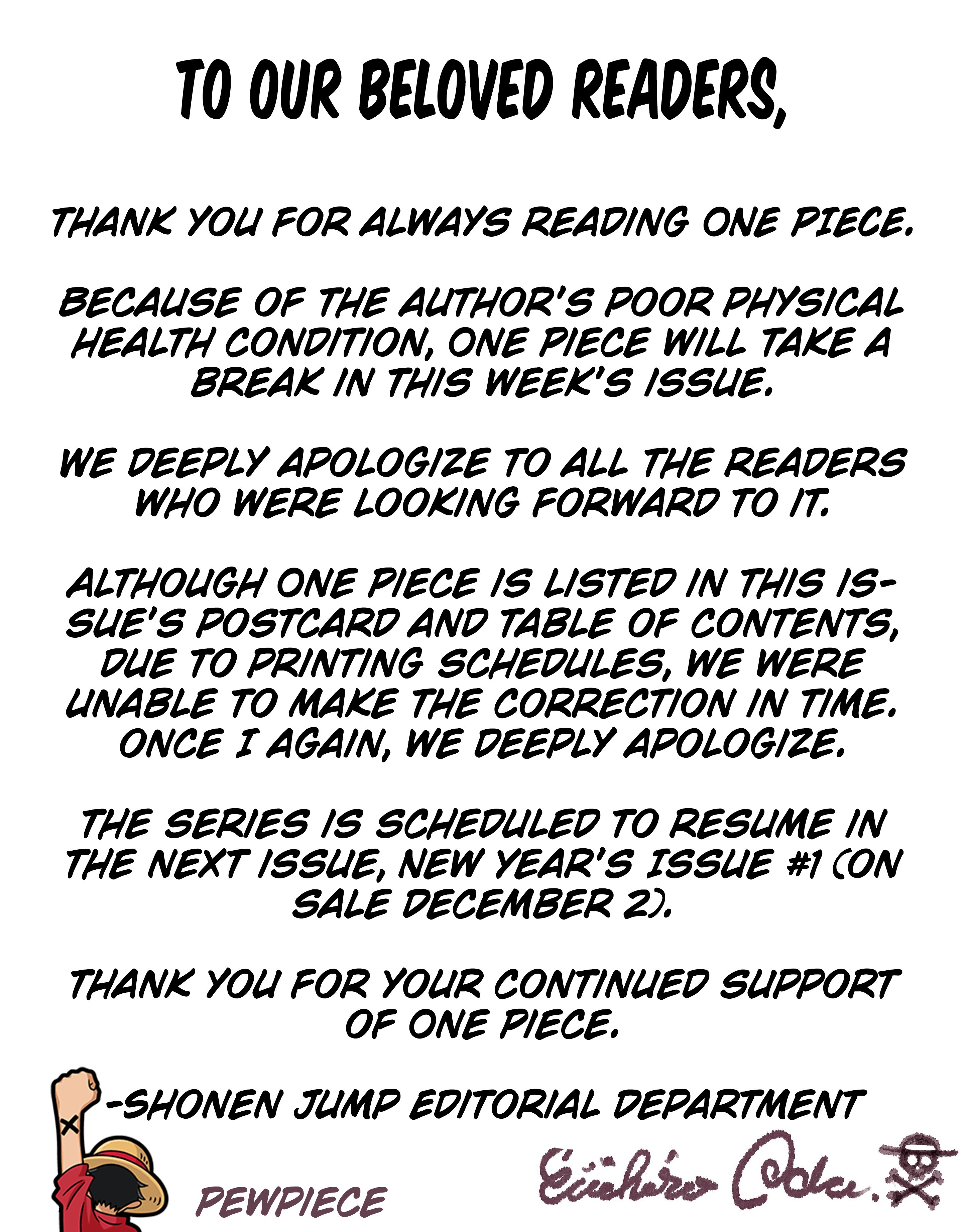
2 weeks break




You put so much effort into this. It deserves to be challenged! I might not be the best suited for it, but I will give it a go. I don't think I can say much about the raw numbers, but I feel like I can say some things about the argumentation. I think some things here were worded strangely to create a slightly different image.Yeah I'm sure they'd appreciate their personal representative here speaking out for them on the topic.
60 is just an arbitrary round number. What matters are statistics. Here's a life table provided by the Japanese Government for the year of 2023. It represents the life expectancy per age group as well as the trends from birth. For example, the row 55 for male shows the number 28.05 in the 2023 column. This indicates that your typical 55 year old male in Japan can expect to live about 28.05 more years totaling out to expecting to die (statistically) by age 83.05.
Akira Toriyama died at age 68 despite being very wealthy and in a first world country with top-notch health care. We don't have the 2024 data yet, but the data usually only improves on expectancy from year to year (the difference between 2022 and 2023 for his age group of 70 is 0.07). The table is in increments of 5 years, so to calculate the life expectancy of a 68 year old we can do:
Life_expectancy(70) + (difference in between individual age (68) and lower limit (65)) / (difference in upper limit (70) and lower limit (65)) * (Life_expectancy(70) - Life_expectancy(65))
(68 - 65)/(70-65)*(expectancy(70)-expectancy(65)) which gives us -2.322. We add this to the expectancy of a 70 year old to estimate how long Akira Toriyama (68) might have expected to live. This gives us a life expectancy of 17.198 for a 68 year old in 2023. This means the average man in Akira Toriyama's age group should live to be 85.198. (Note, if you're wondering how the life expectancy might increase as people age, then check out conditional life expectancy which is a more complicated way to calculate life expectancy taking into account that certain age groups who have survived to certain ages outlive various mortality risks. For instance, a working 65 year old has a mortality risk of accidental death, or occupational hazards than a 75 year old may not have. It's not to say that the risk isn't there for a 75 year old, but that the average risk is lower due to factors like retiring, commuting less, etc..
Some other Mangaka who died fairly young:
Out of curiosity I wrote a pretty simple crawler to look through this page, only considering "Individuals," and run some statistical analysis. Process was:
- Osamu Tezuka (60) - Astro Boy - Stomach cancer
- Kaoru Tada (38) - accidental fall / brain hemorrhage
- Noboru Yamaguchi (41) - cancer
- Tomohiro Matsu (43) - cancer
- Kazuki Takahashi (60) - snorkeling
- Nekoriju (Chiyomi Hashiguchi) - 31 - suicide
- Kentaro Miura (54) - Berserk - aortic dissection
- Hisaya Nakajo (50) - Heart disease
- Eiichi Fukui (33) - Overwork related issues
- Yanwari Kazama (36) - Liver failure
- Kosei Eguchi (23) - undisclosed cause of death
- Filter out Mangaka whose birth / death data is not readily available on wikipedia - this was 377 out of 761 Mangaka listed on the page above, leaving a total of 384 with the needed data.
- I also filtered out any data for candidates born over 124 years ago.
- Created "death buckets" to group mangaka within the age range which they died.
- Took the average, median, and total of both living and dead Mangaka.
Here's the overall data:
JSON:{ "total_samples": "761", "available_samples_with_age_info": "384", "samples_without_age_info": "377", "living": { "total": "332", "average": "57.63253012048193", "median": "56.5" }, "dead": { "total": "52", "average": "65.26923076923077", "median": "64.5" }, "deaths_under_65": "26", "deaths_over_65": "26", "death_buckets": { "31-35": [ "Cocoa Fujiwara", "Eiichi Fukui", "Nekojiru" ], "36-40": [ "Kaoru Tada" ], "41-45": [ "Mia Ikumi", "Tadashi Kawashima" ], "46-50": [ "Satoshi Kon", "Hinako Sugiura", "Tatsuo Yoshida" ], "51-55": [ "Hinako Ashihara", "Ikki Kajiwara", "Kentaro Miura", "Daisuke Satō", "Yoshito Usui", "Yoshihiro Yonezawa" ], "56-60": [ "Yūji Aoki", "Ken Ishikawa", "Shosuke Kurakane", "Ken'ichi Sakemi", "Sakumi Yoshino" ], "61-65": [ "Fujiko Fujio", "Jun Hatanaka", "Kazuhiko Kato", "Kazuki Takahashi", "Shinji Wada", "Murasaki Yamada" ], "66-70": [ "Hideo Azuma", "Shinji Nagashima", "Buichi Terasawa", "Akira Toriyama", "Mitsuteru Yokoyama" ], "71-75": [ "Fujio Akatsuka", "Machiko Hasegawa", "Goseki Kojima", "Masahiko Matsumoto", "Keiji Nakazawa" ], "76-80": [ "George Akiyama", "Yoshihiro Tatsumi" ], "81-85": [ "Hiroshi Hirata", "Kazuo Koike", "Shinji Mizushima", "Takao Saito" ], "86-90": [ "Mitsutoshi Furuya", "Kō Kojima", "Jiro Kuwata", "Leiji Matsumoto", "Sanpei Shirato", "Kazuo Umezu" ], "91-95": [ "Shigeru Mizuki", "Suihō Tagawa", "Toshiko Ueda", "Takashi Yanase" ] } }
TL, DR:
Based on readily available data related to manga artists in Japan, we the can see that the mean age of death is around 65, and the mean age of a living manga artist is around 56. We can also see the data is nearly symmetrical as the mean and median are very close (within about 1 year of each other). The process didn't involve any cherry-picking and all causes of death are considered as would be the case with any study on the impact one's occupation may have on their life expectancy.


--- Double Post Merged, , Original Post Date: ---
In reality, it seems that he had been having health problems for quite some time."Akira Toriyama died at age 68 despite being very wealthy and in a first world country with top-notch health care."

I'm concerned this will raise further cynicism of some claiming that Oda will now rush the manga and will end it in 100 chapters due to this poor physical health condition.Good God, now who will silence the killjoys and jinxes?
--- Double Post Merged, , Original Post Date: ---
In reality, it seems that he had been having health problems for quite some time.



Looks like I stumbled over misinformation. To put it right:What study ?
And what is the following?A case.
Two cases! Is that better? SCNRSo Rumiko Takahashi Is dead
And Go Nagai no longer work
Depending on definition and source round about 4000 in Japan.any idea how many mangaka there are in Japan yes?
And Kurumada Is a male. And Aoyama. And Nagai....Anyway let me elaborate on Rumiko Takahashi as an example a bit further. She is a female

Yeah, without taking a look at any data my guess is that over 90% of the Mangaka (in Japan) are male.And Kurumada Is a male. And Aoyama. And Nagai....
And Araki. And Yudatemago..
--- Double Post Merged, , Original Post Date: ---
Yup, agreed and I think most Mangaka chose living the way they do while being well aware of possible health issues.WTF about this discussion on hint thread about health issues? Mangakas live the way any other person live, if you put so much effort on the work, other things on your life will decline on the same proportion, simple like this.
If you want to be rich working 12 hours a day, if you're a mangaka or a secretary, you'll have health problem.

I consider the domain of the discussion to specifically be about "notable" mangaka, as the schedules for weekly serialized manga is the indicated potential culprit to diminishing their health and life expectancy. Doing a survival analysis on all Mangaka in Japan would require a lot more effort than an internet post, and 30 minutes of scripting, and would require a lot of data that simply isn't available. The sample size in these types of studies doesn't always need to include everyone, as situations can differ. Take American Football as an example. There are millions of "American Football Players" but the NFL itself only has about 2,000 players, IIRC. The concussion rates of NFL players in comparison to American Football players is significant.Based on readily available data related to manga artists in Japan,
Should this not be: Based on readily available data related to notable manga artists in Japan.
Isn't the sample here fundamentally biased? There are a reported 4000 mangaka operating in Japan, not counting part-timers. The ones who would appear on an English speaking wiki--aren't these fundamentally the ones notable enough for english speakers to know their names?
The reason this is important is because you're not controlling for levels of success. The stress and responsibilities on a weekly mangaka are different than the stress a once in four months mangaka would have. If this was the whole group, then great. But this group is already fundamentally filtered out.
This dataset might be misleading.
For example, 90% of books self-published books sell less than 100 copies on Amazon. When confronted with this data, one would say self publishing is a waste of time. But this 90% covers the entirety of the self-publishing space without controlling for quality or marketing. If one was to sample the space, taking into account those with cover costs, editor costs, and marketing costs above a certain threshold, you would find a higher percentage of books selling more than 100 copies.
Akira Toriyama's death was specifically mentioned by me as he's a name everyone knows, and a few standard deviations outside of the norm for his untimely death. Wealth and access to health care (even in the absence of mental health services) are typically seen as deterrents to an early death. Could Toriyama's death have been avoided? Who knows. What I would say is that ignoring potential health issues over a prolonged period can have unforeseen effects on your future health (for instance, not sleeping enough). The risk of blood clots can be increased by a lot of factors, many of which are relevant to a Mangaka's lifestyle.I don't understand why you would write this like this. Bringing this up makes it seem like you're saying that he could be saved. It makes it seem like you're saying that his death was avoidable. And in the context of a post about stress, it feels like you're biasing the reader.
If you get hit by a car and die on site, it has nothing to do with being wealthy or in a first world country. Well, in this case, you're more likely to get hit by a car in a place with more cars, but I digress. Toriyama died of a bloodclot. What exactly are you implying here?
Can we even say they have top notch health care when there is a shortage of therapists and cultural and financial reason impact the seeking of 'top-notch -mental- health care? This doesn't apply to Toriyama, but given that industry, I felt the need to bring this up.
To cherry-pick out unrelated deaths in a meaningful way you typically need to go outside of the scope that I'm willing to do for a Mangahelpers post. I don't exclude a snorkeling death in the same way I don't exclude a retired 95 year old. Deciding what is relevant and what isn't is also not so simple. Death by snorkeling is probably unrelated to manga writing in this case, but in a broader study we could try to derive a correlation of professionals dying in "adventurous" ways and may conclude that some personality types who are more prone to taking risks are present in certain professions. There's also situations where including this type of data is useful. In this case I think it's fine. Removing it doesn't change the mean/median much.On another note, I know you were being unbiased. And I know you didn't cherry pick with the data you had. But I do think it's funny that we're talking about deaths linked to profession and you put in.
Kazuki died because of trying to help, I believe, a mother and her child who was caught in a riptide. Now look, I know that there is value to leaving it all in there. But this is funny. He didn't die directly due to his profession. Other than having heroic ideals that maybe his profession reinforced in him. But I understand why this has to stay in. Maybe being a mangaka predisposes people to risk-taking behavior. Maybe if we tabulate causes of deaths, we would find a trend. I guess it might be legal to say that while a trend has been identified, these numbers don't create the causal link between the stress provoked by the work and death.
- Kazuki Takahashi (60) - snorkeling
Yeah, that's why I kind of made a node of what data was available. I mean I fully admit that this isn't some academic study. It's a scrape of data available for mangaka we'd of maybe heard of. Mangaka are also more illusive than western writers. They tend to keep details about their life private and in many cases don't even release the cause of death, and in other cases the public isn't even informed of their death for a time after they pass.Worth pointing out that we only have a sample of 52 dead mangaka. I'm not sure that this is a good sample size, given the variety of flavors death comes in.
One thing I wonder is should we consider the dates at when manga writing began? We have the first 'modern' manga being born in 1902. Later, we have notes of manga production becoming bigger in 1947. Then the 1950s and 1960s are noted as being the manga boom, with shonen jump coming into being toward the 70s. The reason I bring this up is because the timing of when manga became more visible biases the ages we see. Maybe forty years from now, the median age of death for a mangaka might be higher than today's. Not too sure about that though.
Just a random thought I had because, if you look up the data for Podcasters... The average life expectancy for a podcaster is shy of 50 years of age.
This data about the podcast was made the same as yours--through looking at people with a wikipedia page. Now, I admit, podcasting is younger than manga making. But its illustrative of how the sample size causes wild conclusions.
--- Double Post Merged, , Original Post Date: ---
I don't really get your points.Uhm
Where do you find this stuff exactly?
--- Double Post Merged, , Original Post Date: ---
68 isn't exactly young Age, but ok
--- Double Post Merged, ---
I could make a list of mangaka who surpassed the 60. And so?
--- Double Post Merged, ---
So Rumiko Takahashi Is dead
And Go Nagai no longer work
Thanks for the reply man. Before saying anything else, I want to clarify that I was being pedantic just to make sure that whatever nuance was available was expressed, due to the way statistics can cause a misinterpretation if there isn't totally clarity about the wording. I screwed up my wording too in the post. Thank you for posting what we had available.I consider the domain of the discussion to specifically be about "notable" mangaka, as the schedules for weekly serialized manga is the indicated potential culprit to diminishing their health and life expectancy. Doing a survival analysis on all Mangaka in Japan would require a lot more effort than an internet post, and 30 minutes of scripting, and would require a lot of data that simply isn't available. The sample size in these types of studies doesn't always need to include everyone, as situations can differ. Take American Football as an example. There are millions of "American Football Players" but the NFL itself only has about 2,000 players, IIRC. The concussion rates of NFL players in comparison to American Football players is significant.
Akira Toriyama's death was specifically mentioned by me as he's a name everyone knows, and a few standard deviations outside of the norm for his untimely death. Wealth and access to health care (even in the absence of mental health services) are typically seen as deterrents to an early death. Could Toriyama's death have been avoided? Who knows. What I would say is that ignoring potential health issues over a prolonged period can have unforeseen effects on your future health (for instance, not sleeping enough). The risk of blood clots can be increased by a lot of factors, many of which are relevant to a Mangaka's lifestyle.
To cherry-pick out unrelated deaths in a meaningful way you typically need to go outside of the scope that I'm willing to do for a Mangahelpers post. I don't exclude a snorkeling death in the same way I don't exclude a retired 95 year old. Deciding what is relevant and what isn't is also not so simple. Death by snorkeling is probably unrelated to manga writing in this case, but in a broader study we could try to derive a correlation of professionals dying in "adventurous" ways and may conclude that some personality types who are more prone to taking risks are present in certain professions. There's also situations where including this type of data is useful. In this case I think it's fine. Removing it doesn't change the mean/median much.
Yeah, that's why I kind of made a node of what data was available. I mean I fully admit that this isn't some academic study. It's a scrape of data available for mangaka we'd of maybe heard of. Mangaka are also more illusive than western writers. They tend to keep details about their life private and in many cases don't even release the cause of death, and in other cases the public isn't even informed of their death for a time after they pass.
Overall you have fair points, but I find it crazy how many (famous) mangaka die literally decades away from their life expectancy in the absence of hard drugs (which aren't really used in Japan), obesity, and alcohol abuse. This type of data interests me and I wish there were more data available to work with.
--- Double Post Merged, , Original Post Date: ---
I don't really get your points.
68 isn't young, sure, but in Japan it's unusual for someone to die at 68 outside of an accident.
There are mangaka who surpassed 60 in my list, so I'm not really sure why you mention it. Maybe it's a language barrier thing but I think you took my original post way too literally. I never meant to imply every mangaka drops dead at 60. I meant that it's way less unusual for mangaka to die young than say, a salaryman.



The breaks to me failed because they didn't turn out to be real breaks. As far as I can see Oda has filled that time to work on other parts of the OP franchise so even though there is a break in the manga, it doesn't appear to be a break for Oda himself. At this point in his career, with the success he has, Oda can definitely insist on actual time off for himself without much issue but I think he is himself stuck in the toxic part of mangaka culture. Unless he is forced to take time off I don't think he will and the publishers, animators, etc would never do that. Japan's work culture as a whole has lots of issues like this and I don't think I've ever seen a sign that it is headed in the right direction i.e. better work/life balance.the frequent breaks strategy obviously failed, (unless it turns out Oda just caught a little cold...).
that's the point. i would say Oda should consider having a life-coach, or someone who can see the fall before it happens...and make him stop...The breaks to me failed because they didn't turn out to be real breaks As far as I can see Oda has filled that time to work on other parts of the OP franchise
Yeah I wish the same but not holding my breath. Unfortunately, just not really part of Japanese work culture so we just have to cross our fingers and hope he finishes the story.that's the point. i would say Oda should consider having a life-coach, or someone who can see the fall before it happens...and make him stop...
And what you suggest?the frequent breaks strategy obviously failed, (unless it turns out Oda just caught a little cold...).
already didAnd what you suggest?