
- Joined
- Aug 3, 2006
- Messages
- 3,930
- Reaction score
- 5,624
- Gender
- Hidden
- Country
-


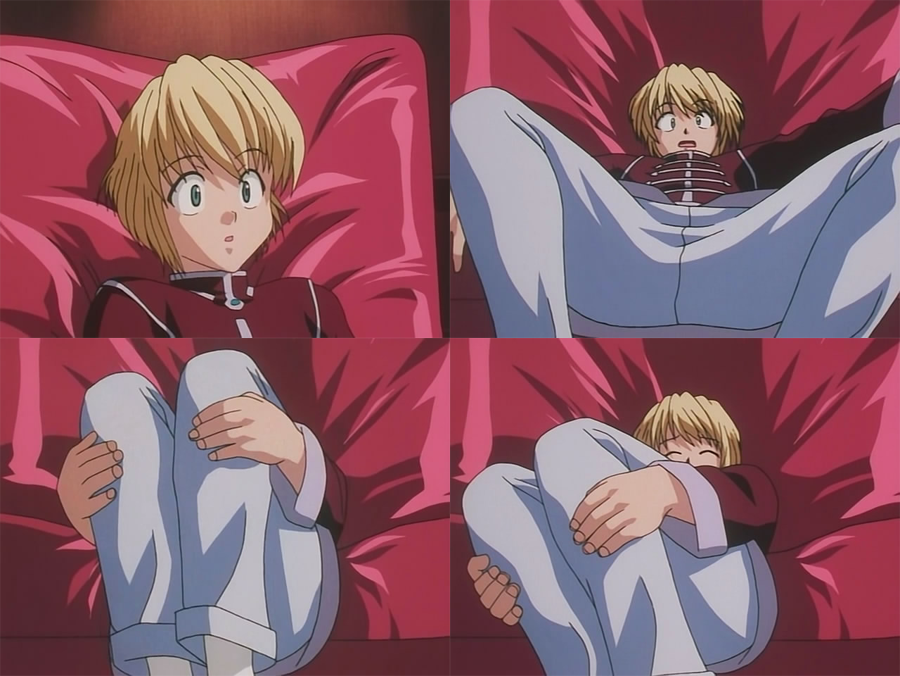
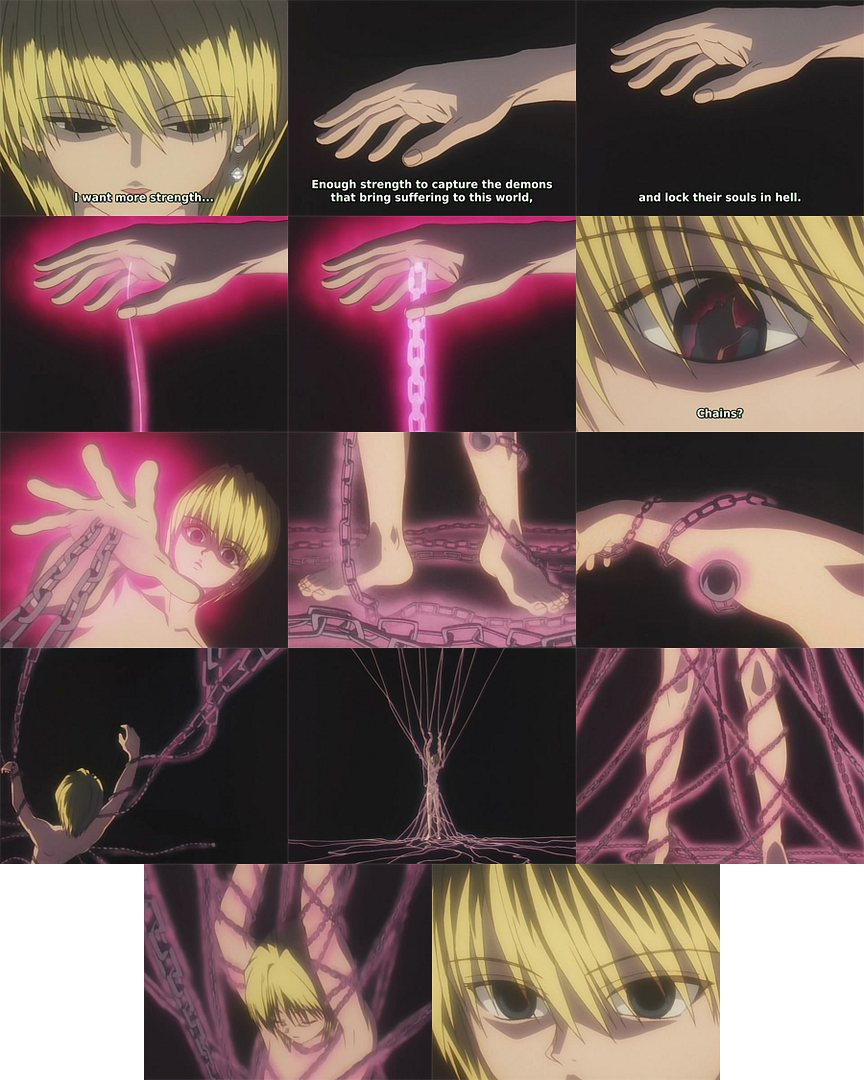
Umm, no. I'm really sorry. Even if I am to buy that as the truth, the manga itself has Kurapika sorta wobble a bit and ask himself if he stayed in that state too long. Why go through all this added effort to have him on his knee, grabbing his face when the manga made it clear that the ordeal only sorta made him a little woozy at best? Why? What is the point of this? Maybe you feel as if all this extra effort is necessary, but all it does to me is continue to show just how little the 1999 version understands the characters it's supposed to portray. I mean hell, if that's what Furuhashi wanted to portray, why remove the line about 'Did I remain in that state too long?' How can you support this when it just makes Kurapika seem even weaker than his manga counterpart? I never said he cried, and quite frankly Togashi does a far better job of not showing him as a mere sociopath later on in the arc when he makes a deal with Pakunoda for the exchange of Gon and Killua. I thought the prayer was kind of forced in to make us feel like Kurapika feels bad for what he did. Like 'KURAPIKA IS SAD, AND YOU SHOULD BE TOO.' It really wasn't necessary at all, it just feels like Furuhashi is trying to force his narrative down our throats rather than use the medium of animation itself for us to draw our own conclusions. I don't need the director to tell me how to feel. That's just as bad (if not worse) than that narrator (whom is mostly cannon.) that you seem to hate so much.What are you talking about? There was no "break down", I suggest that you watch ep. 56 again. There was a 5 seconds scene just after he killed him where he facepalmed himself (actually it lasted like 2 seconds) which was a result of fatigue after being in scarlet eyes mode. In a later episode he says the prayer which in no way suggest any kind of a break down but corresponds perfectly with what his master said, i.e. that these killings will give him nothing but emptiness. But he's not crying in the corner as you're suggesting, not even close. Thanks to this we get to know him better and can see directly how come he keeps his calm and sanity this whole time while not being a sociopath.
Anyway, even the best episode of a new version of Hunter x Hunter is worse than 1999 version and here we have another example of it. Overall, episodes 56th and 47th they are very similar but details make a difference. While quality of animation is better in the new one (obviously, it would be laughable if it wasn't although there were episodes where a 12 year older anime had better animation) the fight is over the top here as if taken out from Naruto or Bleach. Kurapica and Uvo jumping 100 meters high and actually staying that way for a few seconds (you can see it around 4th-5th minute) or Uvo running along the vertical slope make it look like some kind of a travesty when compared to the old anime. Plus there's still that narrator for kids which is annoying as hell.
And while I'm at it, one of the things I really didn't like in the recent episodes (there are tons of stupidities or examples of bad direction but I don't have time to write about them all) was the presentation of Kurapica's colleagues, especially the Haiku guy. In the old anime Uvo made a huge impact on me when he stopped the bullets as if they were flies but in the new one it was downgraded since even that Haiku guy could do it.
In any case, as I've been saying, both versions really had their issues with this fight. Uvo's strongest attack bounced Kurapika a few inches, and the chain can suddenly produce electricity? Wooooooow. How is THAT not over the top? Meanwhile Madhouse is and I agree with you, is way over the top. From the music to some of the choices in animation. (I didn't mind it, but I did notice it.) I don't really care if you think 1999 did a better job with the series, or that you hate 2011, since honestly both still pale in comparison to the manga.
In summary 1999 has a bunch of directorial, art, and storyboard issues as well. Please don't make it seem as if it doesn't.
Last edited:





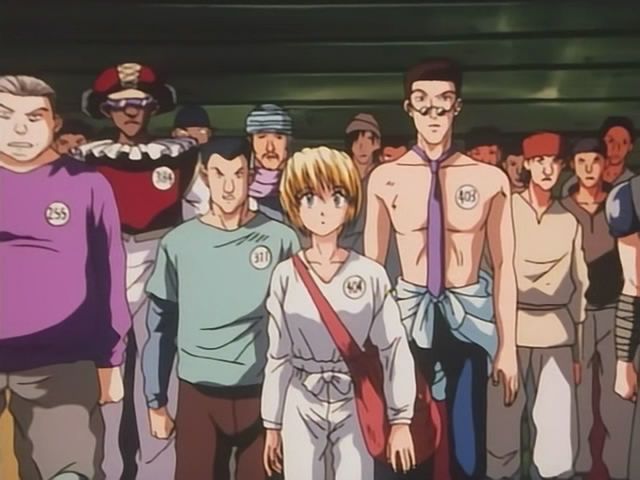
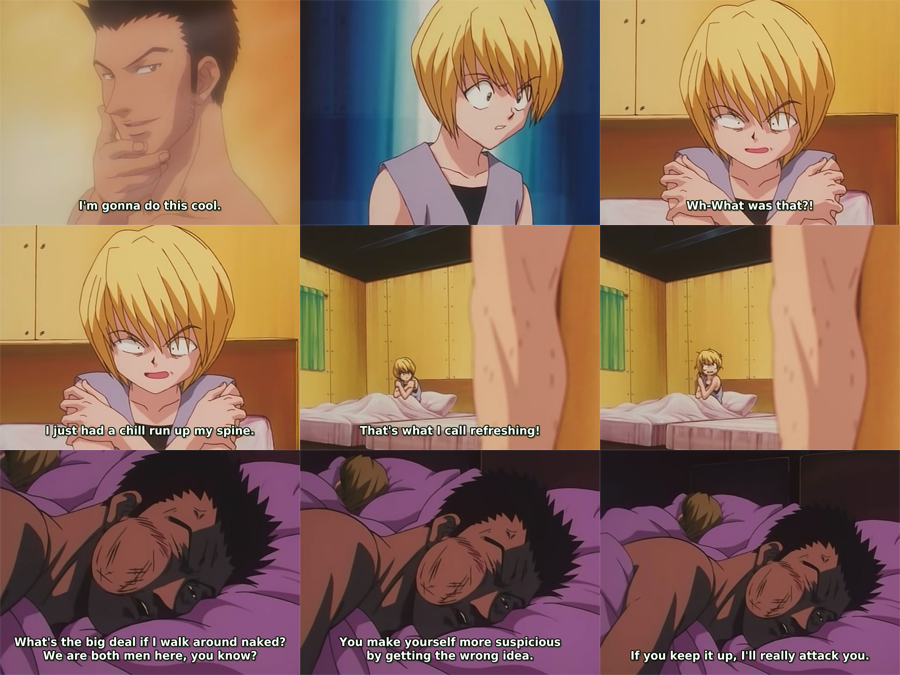






 but 1999 has the edge for the coherent directional intent and artistry (as usual). you should watch it again.


